
A pair advertised as “one carat” may not contain a one-carat diamond in each ear. The figure may describe both principal stones or include accents. Dubai buyers should inspect and document earrings as one system, including the diamonds, settings, posts and backs.
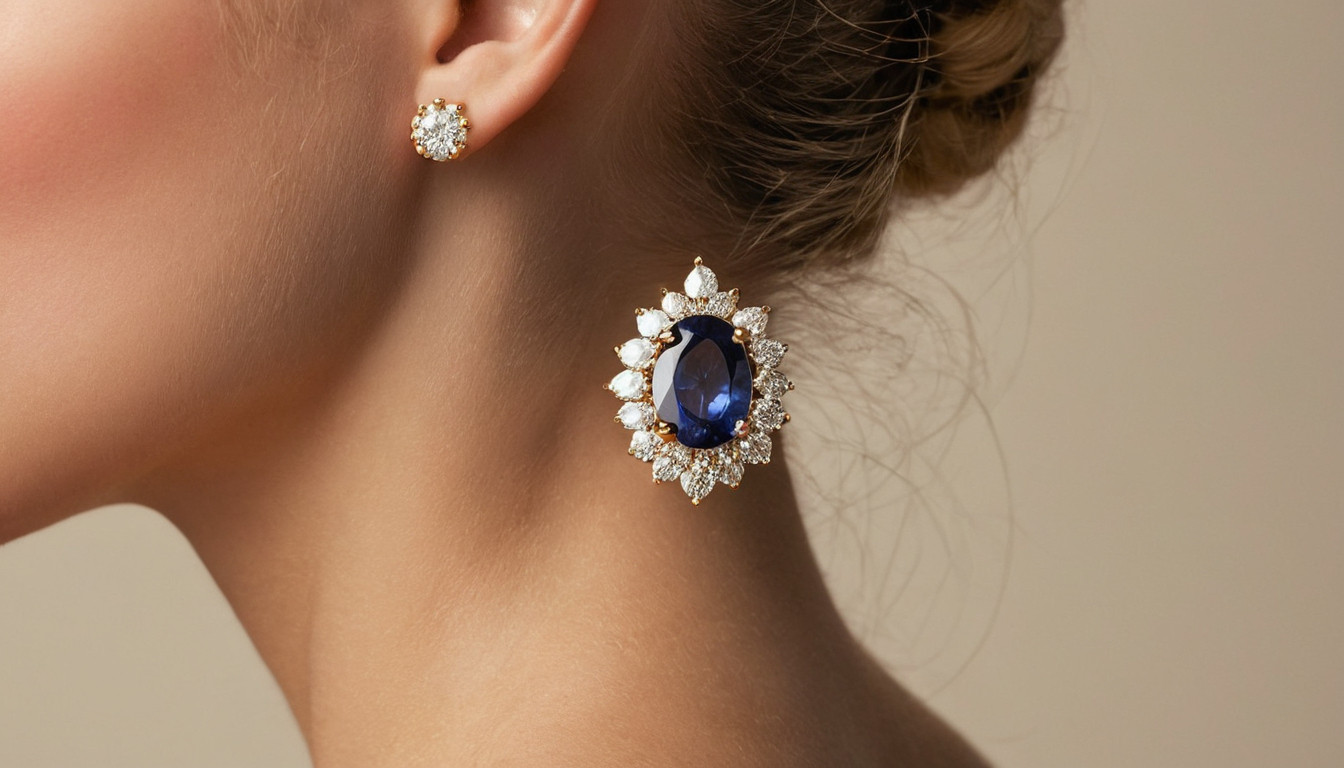
Diamond Earrings in Dubai: How to Compare Total Carat Weight, Matching and Back Security shown as a fine jewellery reference.
How should Dubai buyers interpret total carat weight for diamond earrings?
Total carat weight usually means the combined weight of all diamonds in the pair, not each principal diamond. Before comparing Dubai quotations, ask the retailer to separate principal-stone weight from accent weight.
- Confirm what ctw, tcw or tw means on the specification.
- Record total weight, diamond count, shapes and available per-stone weights.
- Ask whether halo, pavé or cluster diamonds contribute to the total.
- Confirm whether weights are exact or approximate and review any written tolerance.
Does one-carat total weight mean each diamond earring contains a one-carat stone?
No. One metric carat equals 200 milligrams and measures weight, not visible dimensions. A two-stone pair described as approximately 1.00 carat total might contain principal diamonds near 0.50 carat each. If accents contribute, each principal diamond will weigh less.
What carat weight is suitable for everyday diamond earrings?
No single weight suits every wearer. Earlobe size, piercing position, diamond shape, setting diameter, profile and daily activity affect comfort and proportion. Compare face-up millimetre dimensions because they predict visible size more reliably.
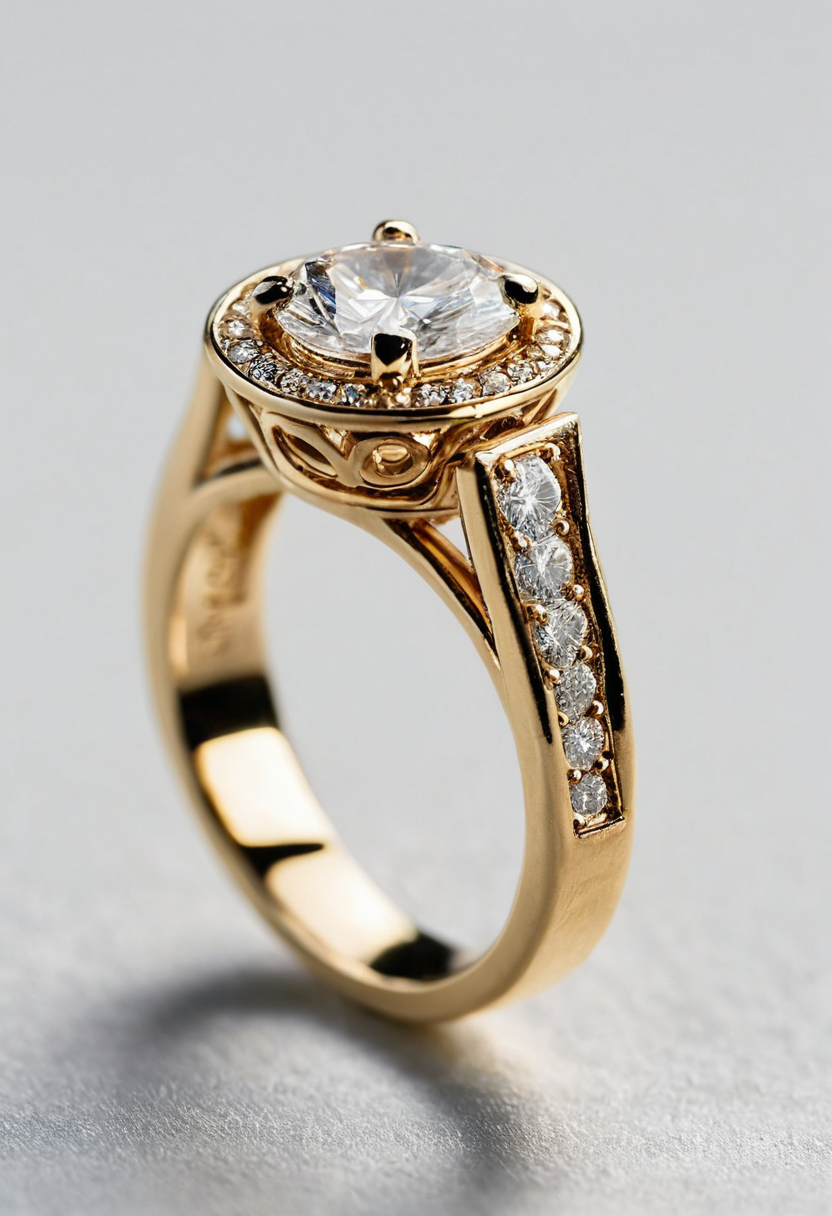
How should Dubai buyers interpret total carat weight for diamond earrings shown with jewellery material and scale cues.
Diamond earring dimensions predict visible size better than carat weight alone
Pairs with identical total carat weight can look different because carat measures weight while length and width determine visible spread. Compare both principal diamonds under the same lighting and consider metal that covers or enlarges their outlines.
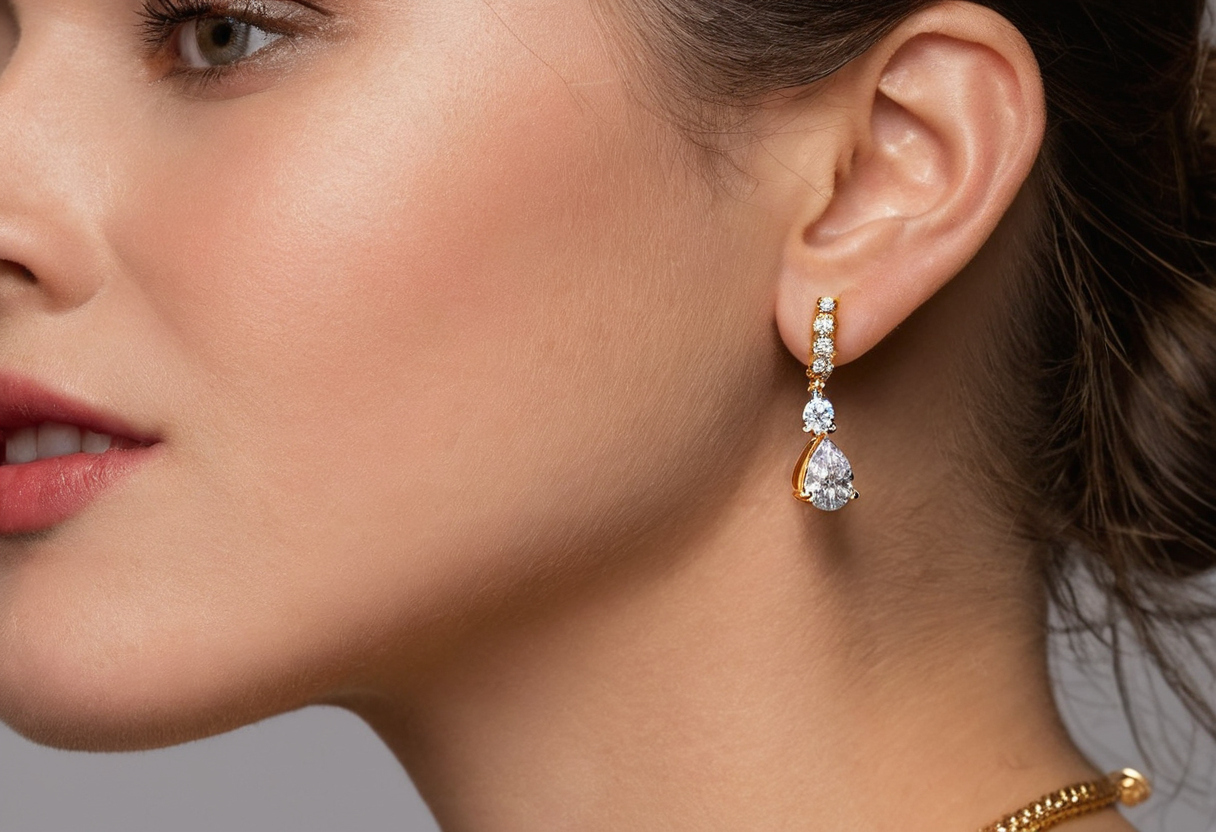
Diamond earring dimensions predict visible size better than carat weight alone shown with jewellery material and scale cues.
How should millimetre measurements be compared for round diamond studs?
For each round diamond, record minimum diameter, maximum diameter and depth from the grading report or a calibrated loose-stone measurement. Averaging both diameters provides a practical spread comparison. A substantial difference can indicate a less-round outline.
| Worksheet entry | What to compare | Why it matters |
|---|---|---|
| Round studs | Minimum diameter, maximum diameter and depth | Similar average diameters create better face-up balance. |
| Fancy shapes | Length, width, depth and length-to-width ratio | Equal weight does not guarantee matching spread. |
| Setting coverage | Prong width, bezel rim, visible girdle and halo | Metal can enlarge the earring while reducing visible diamond area. |
A deep diamond can retain weight below the girdle without gaining equivalent face-up diameter. Measurements are easiest to verify before setting because metal may conceal the girdle. Carat-to-millimetre charts are shape-specific estimates, not guaranteed standards.
How do cut and proportions affect the appearance of diamond earrings?
Visible spread should not compromise brightness or pair balance. GIA provides an overall cut grade for qualifying D-to-Z standard round brilliant diamonds. Fancy shapes require shape-specific analysis and visual comparison. The GIA diamond quality factors distinguish cut from colour, clarity and carat weight.
Polish and symmetry are separate assessments, not substitutes for cut quality. IGI laboratory-grown diamond reports assess round-brilliant cut through proportions and optical effects, while fancy shapes receive shape-specific assessment. Tilt both earrings together and compare their brightness, dark patterns and flashes.
A matched pair of diamond earrings should look alike before its grades look identical
Well-matched earrings should show similar face-up size, outline, brightness, colour and visible clarity. Identical report grades matter less than a convincing side-by-side appearance under consistent conditions.
Which diamond 4Cs need to match most closely in earrings?
Prioritise measurements, outline and light performance. Round diamonds should have comparable minimum and maximum diameters. Fancy shapes should align in length-to-width appearance, corners and symmetry. Tilt both together because one that darkens sooner can look mismatched during head movement.
Colour should appear consistent after mounting. Metal colour may influence apparent warmth. Compare the pair under neutral shop lighting and daylight because fluorescence or surrounding colours may alter its appearance.
Clarity differences matter mainly when an inclusion is visible at normal distance, reduces transparency or creates a durability concern. GIA defines diamond clarity by the relative absence of inclusions and blemishes. Different clarity grades may look alike without magnification. Uneven prongs or a tilted setting can also affect apparent size or brightness.
When should both diamonds have individual grading reports?
Separate reports become more useful as stone size and pair value rise, or when natural versus laboratory-grown identity, treatment disclosure and future identification matter. Reports may be impractical for small diamonds, so their absence does not prove poor quality.
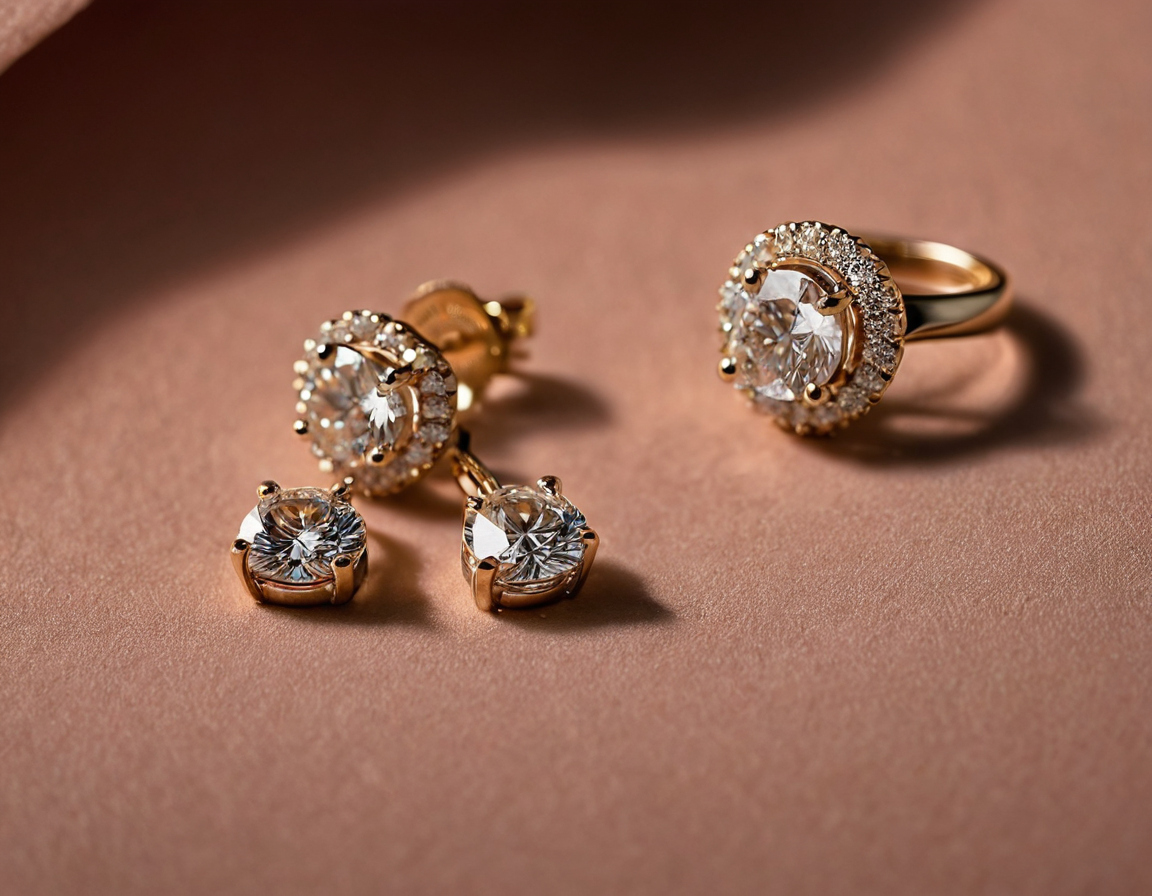
A matched pair of diamond earrings should look alike before its grades look identical shown as a fine jewellery reference.
For reported stones, match each document’s weight, measurements and report number to the invoice. Check any laser inscription where the setting permits. GIA Report Check compares report information with GIA’s archived record. Applicable laboratory-grown reports may disclose CVD or HPHT growth and post-growth colour treatment.
A report documents assessed characteristics but cannot guarantee that two mounted diamonds look identical. Also check that both settings hold their stones at the same angle and height.
Diamond earring settings balance visibility, profile height and stone protection
Prongs expose more diamond, while bezels cover more of the edge and may reduce snagging. Security depends on workmanship, stone seating, girdle condition, profile and maintenance.
- Check the profile: a high basket can project or tilt on a soft earlobe.
- Inspect the base: a pointed martini setting may press into the piercing.
- Examine the girdle: exposed or very thin edges face greater impact risk.
- Confirm the metal: request the fineness and ask whether posts and backs use the same alloy.
- Request inspection: seating and metal condition cannot be judged from the setting name.
When are prong-set diamond earrings appropriate?
Prong-set earrings suit buyers who prefer an open outline and accept periodic maintenance. Basket settings support the stone beneath, while martini settings taper towards the post and may sit close to the ear.
Under magnification, each prong tip should contact the diamond and appear balanced. Bent, lifted, worn, uneven or catching prongs require attention. Four- and six-prong designs can work well, but extra prongs cannot compensate for poor seating.
When are bezel-set diamond earrings appropriate?
Bezels can suit frequent wear, long hair, head coverings or regular clothing changes. The rim should surround the diamond evenly, without gaps, lifted areas or movement when tested by a qualified jeweller.
A fine bezel creates a narrow border, while a wider rim looks more metal-forward and reduces exposed diamond area.
Which earring back is most secure for the recipient’s daily use?
Friction, screw and positive-locking backs can be secure when fitted to compatible, straight and undamaged posts. The best practical choice is one the recipient can close fully, confirm by touch and maintain.
How do friction, screw and locking backs differ?
No back makes earrings loss-proof. The post diameter, groove, thread or locking feature must correspond with the back.
| Back type | Compatible post | Confirmation | Common concern | Practical use |
|---|---|---|---|---|
| Friction | Smooth post, often with retaining groove | Firm, even resistance | Components may loosen | Convenient for frequent removal |
| Screw | Matching threaded post | Turns fully into position | Cross-threading or worn threads | For wearers comfortable twisting |
| Positive-locking | Corresponding specialised post | Click or mechanical engagement | Incomplete locking or incompatible replacement | Useful when operated reliably |
How should diamond earring backs be tested before purchase?
The wearer should insert each post straight, close the back fully, confirm engagement, apply gentle resistance and remove it correctly. Test both earrings and compare resistance. Reject rough threads, looseness, bent posts, sharp tips, damaged grooves or painful backs.
What habits reduce the risk of losing diamond earrings?
Check post straightness, back tension and setting security before wear. Remove earrings before swimming, contact sports, sleep and snag-prone dressing. Store each earring with its matching back in a lined, divided container. Long nails or frequent removal may favour a closure that is easier to confirm by touch.
Ask the seller to identify the back style and document inspection, repair and replacement arrangements.
Dubai diamond earring purchases need a specification-led invoice and after-sales check
Before paying, reconcile the physical pair with its description, grading documents and invoice. Paperwork should clearly identify the weight basis, stone identity, metal fineness and commercial terms.
What should a Dubai diamond earring invoice state?
The tax invoice should contain the seller, transaction and tax details required under current UAE rules. The jewellery description should record:
- one pair, with principal and accent-stone counts;
- per-stone or combined principal weight, plus separate accent weight where applicable;
- diamond shapes, measurements, colour and clarity specifications;
- natural or laboratory-grown identity and disclosed treatments;
- verified report numbers and laser inscriptions where available;
- metal type and fineness, such as 18K or 750;
- back style, warranty, repair terms and return exclusions.
The GIA 4Cs cover cut, colour, clarity and carat weight. Buyers needing identity guidance can review how lab-grown and natural diamonds differ. An IGI finished-jewellery report may identify mounted gemstones, precious-metal content and visible purity stamps, subject to setting access.
What should buyers compare when diamond earring prices differ?
Compare same-date quotations using equivalent specifications: diamond identity, per-stone weights, dimensions, shape, cut performance, colour, clarity, fluorescence, matching, reports, metal, setting, backs and after-sales support. Total carat weight alone does not explain price or wearability.
Ask whether cleaning, inspection, replacement backs, post repair and customised-item returns are included. If considering another gemstone, keep comparing moissanite with diamonds separate from a diamond-to-diamond quotation. Pay only when the pair, hardware, grading information and written specifications agree.
Frequently asked questions
What is the best total carat weight for everyday diamond earrings?
The suitable total depends on earlobe size, piercing position, setting profile and routine. Compare comfort and face-up dimensions rather than weight alone.
Does one-carat total weight mean each diamond earring is one carat?
No. It usually describes all diamonds across the pair. Two principal stones may be near 0.50 carat each, or smaller if accents are included.
Are two-carat total weight diamond earrings too large for daily wear?
Not necessarily. Setting height, dimensions, earlobe support and closure fit determine whether the pair feels balanced and comfortable.
Why can pairs with the same total carat weight have different prices?
Price varies with diamond identity, cut, colour, clarity, dimensions, matching, metal, workmanship, reports and after-sales service.
Are screw backs always more secure than friction or locking backs?
No. Screw backs can loosen or cross-thread, while worn friction backs and incompletely engaged locking backs can fail. Compatibility, condition and correct operation matter more than the mechanism’s name.