
Moissanite is not a lab-grown diamond, and Dubai engagement-ring buyers should compare identity first
Price is not the first question. For engagement-ring buyers in Dubai, moissanite should be treated as a diamond simulant, not as a natural diamond or a lab-grown diamond. Diamond is carbon, while moissanite is silicon carbide, so disclosure, documents, resale expectations, and personal meaning must be settled before appearance or budget.
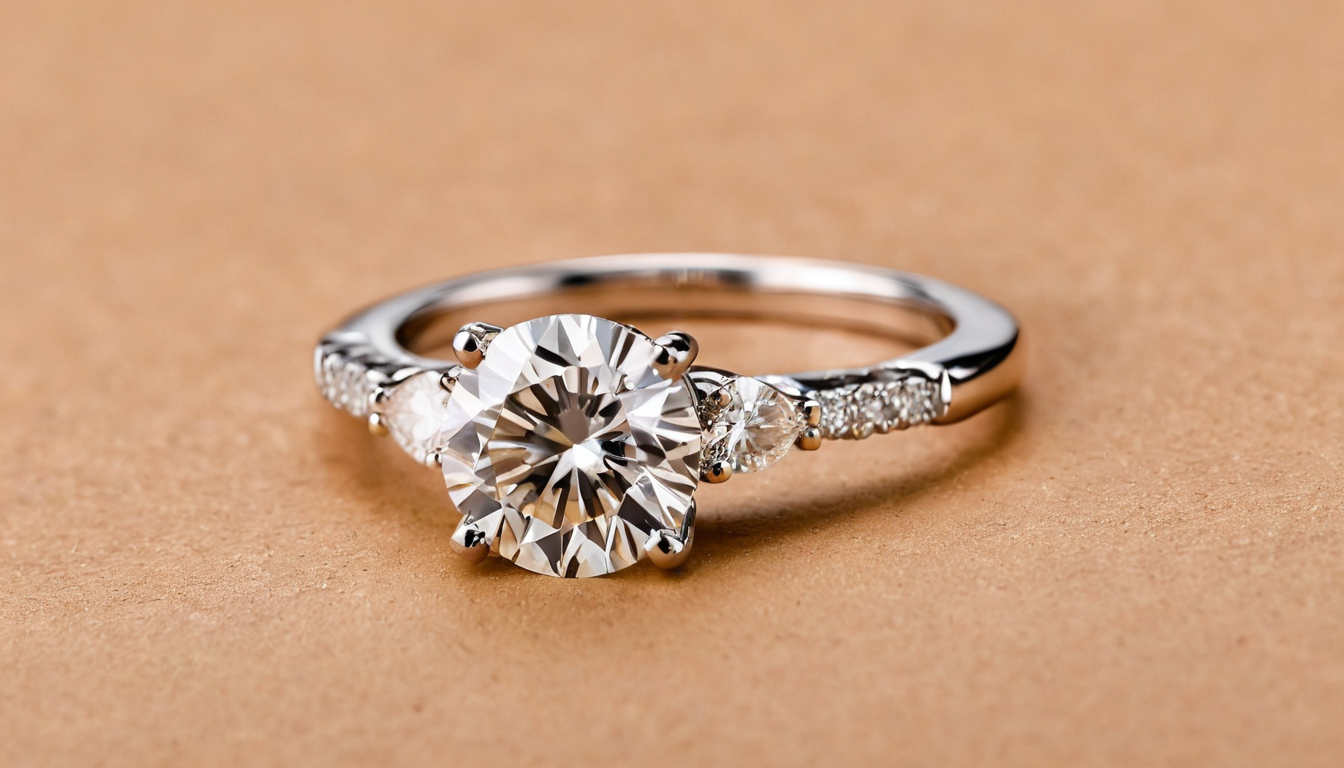
Moissanite is not a lab-grown diamond, and Dubai engagement-ring buyers should compare identity first shown with jewellery material and scale cues.
A moissanite engagement ring can be a sensible, durable, beautiful choice, but only when the buyer and recipient understand what the centre stone is. The honest limitation is simple: moissanite may look diamond-like, yet it does not carry diamond identity. That distinction affects how the ring is described on the invoice, how the stone is discussed with family, and how the recipient may feel if diamond identity matters.
Commercial jewellery moissanite is generally synthetic moissanite. GIA states that synthetic silicon carbide is known in the gem and jewellery market as synthetic moissanite, and moissanite itself is silicon carbide, with the formula SiC. Natural moissanite exists, but natural material is very rare, so buyers should not treat a retail moissanite centre stone as a mined-diamond equivalent or a natural rarity claim.
- Ask first: Is the centre stone diamond, lab-grown diamond, natural diamond, moissanite, or another simulant such as cubic zirconia?
- Ask second: Will the invoice name the centre stone material clearly, rather than using only “diamond look,” “diamond alternative,” or “bridal ring” wording?
- Ask third: Does the recipient want the visual effect of a bright white stone, or does the recipient specifically want diamond identity?
A diamond simulant can look diamond-like without being a diamond
A diamond simulant is a material that imitates the appearance of diamond but is not diamond. Moissanite, cubic zirconia, white sapphire, and some glass products can all be sold in diamond-like styles, but the visual role of a stone does not change the stone’s material identity.
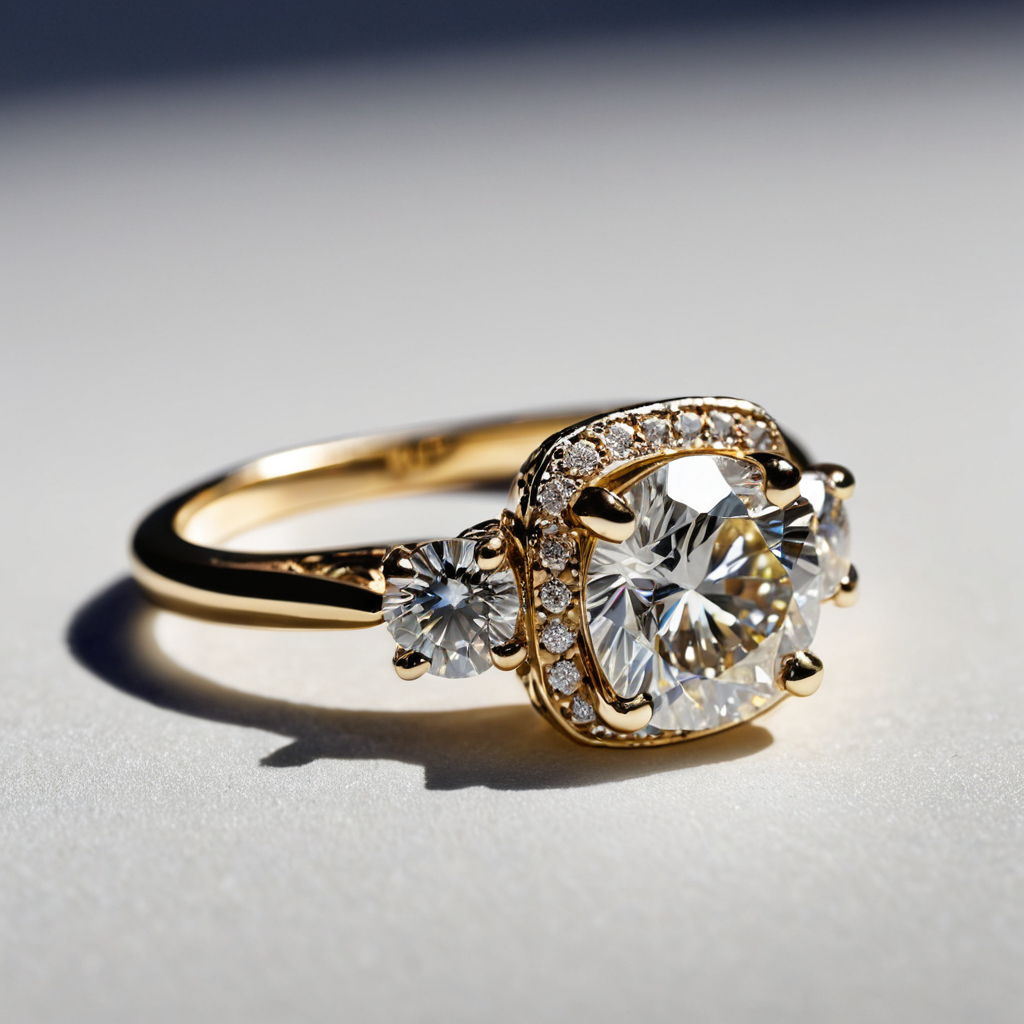
A diamond simulant is a material that imitates the appearance of diamond but is not diamond shown as a fine jewellery reference.
Dubai buyers should be careful with casual showroom language. A phrase such as “diamond-like” can describe appearance, but it should not replace the stone name. “Moissanite diamond” is also poor wording because it mixes two different identities. Clear wording would say “moissanite centre stone” or “diamond centre stone,” depending on the material.
The safest buying habit is to separate style from substance. A solitaire ring can hold a diamond or a moissanite. A halo ring can frame a diamond or a moissanite. A certificate-style card can describe many stones, but the document must still identify the material accurately.
Lab-grown diamond and natural diamond are diamond origins, while moissanite is a different material
Natural diamond and lab-grown diamond are both diamond materials with different origins. Natural diamond forms geologically, while lab-grown diamond forms in a controlled production environment. The buyer deciding between those two diamond origins can review a dedicated lab-grown or natural diamond ring comparison in Dubai.
Moissanite belongs in a different decision box. Moissanite is not a lab-grown diamond because the material is silicon carbide, not carbon diamond. A lab-grown diamond should be disclosed as lab-grown diamond. A natural diamond should be disclosed as natural diamond. A moissanite should be disclosed as moissanite.
This identity check protects both emotion and paperwork. If the recipient values diamond tradition, moissanite may disappoint even if the ring looks impressive. If the recipient values size, brightness, and a non-diamond choice, moissanite may fit beautifully. Once the identity is clear, the next showroom question becomes visual: how moissanite and diamond behave under LED lighting, daylight, and phone video.
Moissanite and diamond look different when Dubai buyers compare fire, brilliance, colour, and size side by side
For Dubai shoppers comparing stones in showroom lighting, daylight, and phone videos, moissanite and diamond can both look bright, but the stones do not return light the same way. Compare fire, white brilliance, body colour, cut quality, and size side by side before treating one as a substitute for the other.
Identity explains the first difference, but appearance decides whether the ring feels right on the hand. A diamond has a different optical character from moissanite: diamond is usually judged through the 4Cs, while moissanite is judged through colour category, cut style, millimetre spread, and the buyer’s reaction to its stronger spectral flashes.
- View the stones under showroom LEDs. Bright retail lighting can make both stones look lively, but it may exaggerate rainbow flashes.
- Move to natural daylight near a window or outside shade. Daylight helps reveal body colour and whether the stone looks crisp, icy, warm, or overly fiery to the wearer.
- Record a short phone video while tilting the ring. A close-up video often shows whether the buyer likes the stone in motion, which is how an engagement ring is seen in daily life.
Moissanite often shows stronger rainbow fire than diamond under bright retail lighting
Fire is the coloured light a faceted stone separates into rainbow flashes. Moissanite generally shows more of this effect than diamond because moissanite has higher dispersion. The moissanite reference data lists dispersion as 0.104, while diamond is commonly listed around 0.044 in gemmological references.
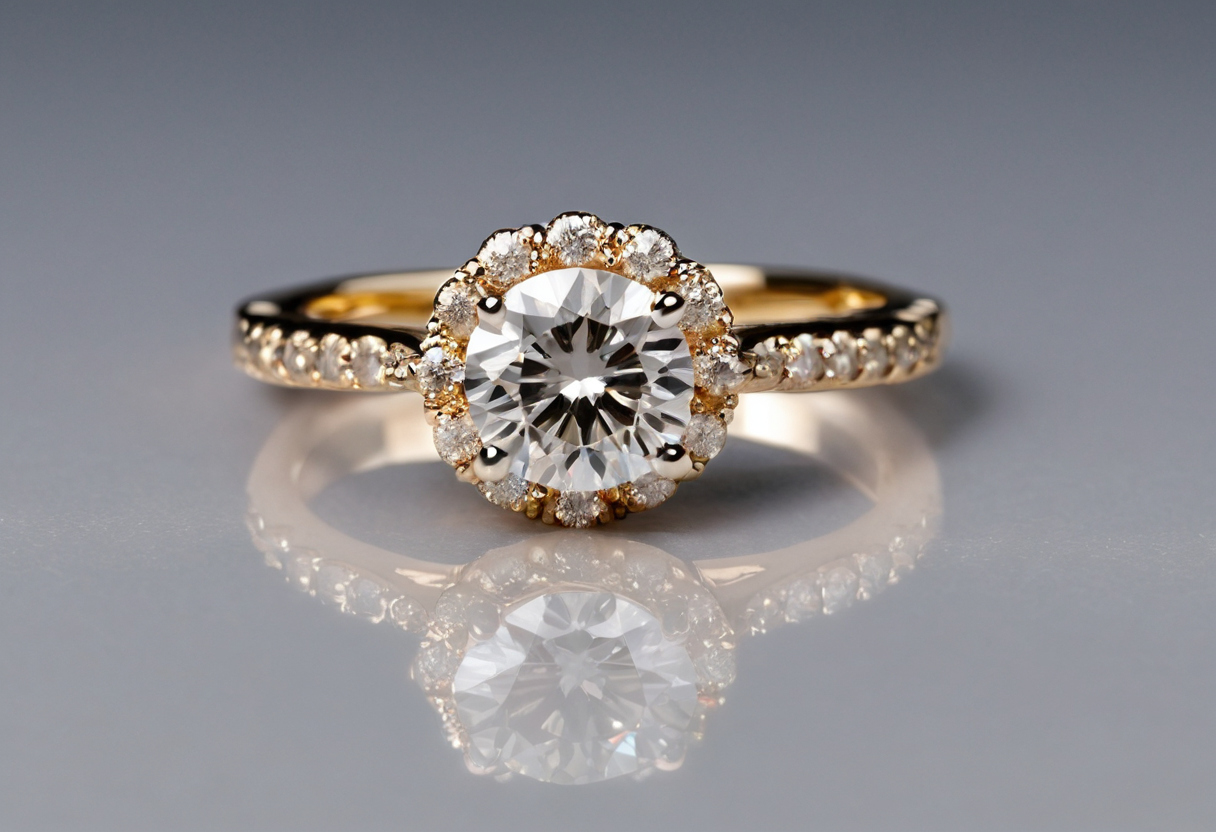
Moissanite and diamond look different when Dubai buyers compare fire, brilliance, colour, and size side by side shown as a fine jewellery reference.
Refractive behaviour also differs. The same moissanite reference lists refractive index values of nω = 2.654 and nε = 2.967, while diamond is singly refractive at about 2.42. In practical terms, moissanite can look very bright and fiery, but some buyers find large rainbow flashes less diamond-like in a solitaire engagement ring.
Moissanite fire is not a flaw. It is a visual preference. Choose moissanite if the wearer enjoys vivid flashes and a bolder look; choose diamond if the wearer prefers a balance of white brilliance, contrast, and more traditional diamond scintillation.
Diamond comparison should still use the 4Cs, while moissanite comparison uses different grading language
Diamond buying should still start with cut, colour, clarity, and carat weight. Cut affects light return most visibly, colour affects how white or warm the diamond appears, clarity describes internal and external features, and carat weight measures weight rather than face-up size.
Moissanite should not be sold as if it has a diamond 4Cs report. Retail descriptions usually refer to colourless or near-colourless appearance, cut style, shape, and millimetre size. Some sellers use “carat equivalent” wording to help buyers picture size, but carat equivalent is not diamond carat weight. A Dubai invoice or quotation should make that difference clear.
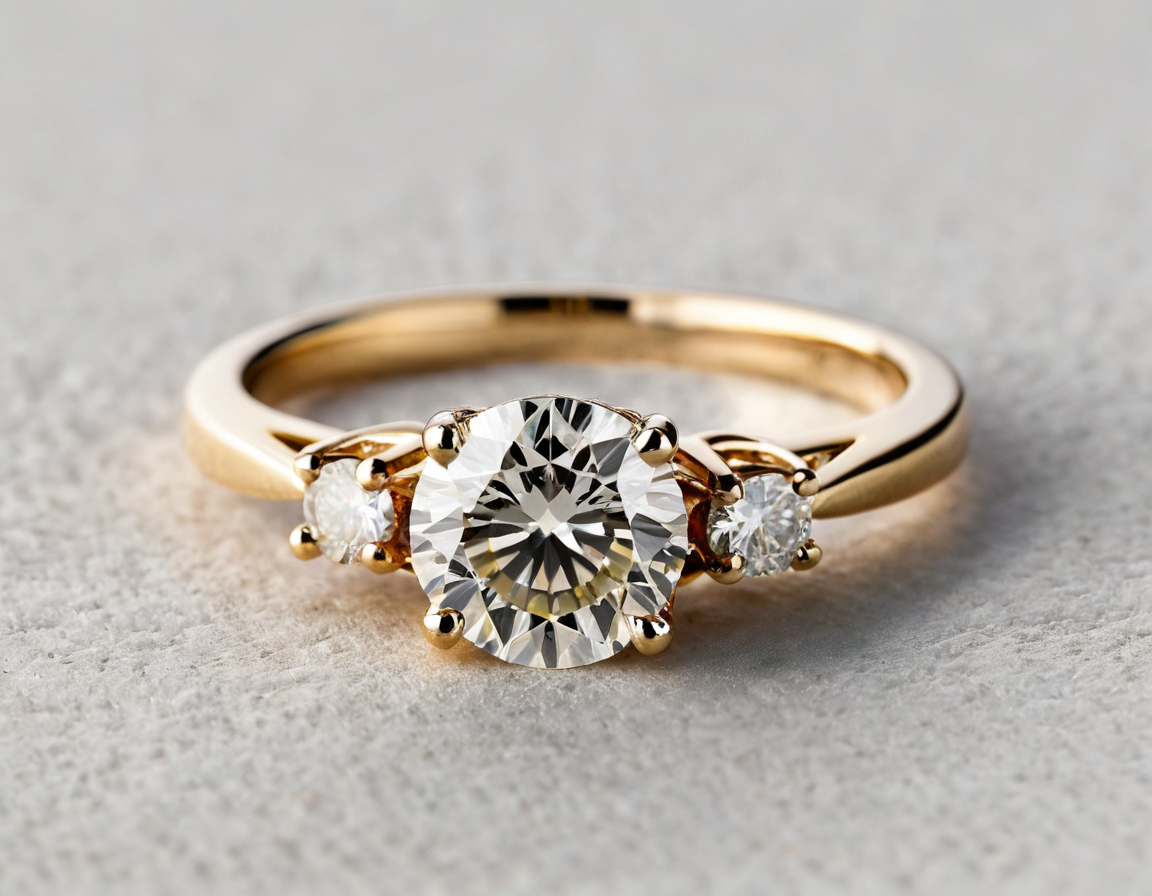
Moissanite should not be sold as if it has a diamond 4Cs report shown with jewellery material and scale cues.
Commercial jewellery moissanite is also not a mined rarity story in the way some diamond buyers understand rarity. GIA notes that natural silicon carbide is very rare and generally occurs as tiny natural moissanite crystals, usually less than 1.5 mm, in only a few deposits worldwide; engagement-ring moissanite is therefore usually synthetic material rather than a mined centre stone.
Large moissanite centre stones may reveal visual differences more clearly than small accent stones
Centre-stone size changes the comparison. A small moissanite accent beside diamonds in a halo or side-stone setting may blend visually at normal viewing distance, especially after the ring is worn in daily life. A large round, oval, pear, or radiant moissanite centre stone gives the eye more surface area to notice doubled facets, stronger fire, and a different pattern of brightness.
- For a solitaire: compare diamond and moissanite loose stones before approving the setting, because the centre stone carries the whole visual identity.
- For a halo or three-stone ring: check whether moissanite accents and diamond accents match closely enough in colour and brightness.
- For a surprise proposal: choose the stone identity the recipient expects, not only the stone that looks largest in the tray.
Once the visual choice feels honest, the next comparison is not sparkle. Diamond and moissanite are both durable engagement-ring stones, but daily wear still depends on the setting, prongs, and care routine.
Diamond and moissanite are both durable for engagement rings, but daily wear still depends on setting and care
For a Dubai engagement ring worn daily, both diamond and moissanite are hard enough for regular jewellery use, but neither choice removes the need for secure setting, routine inspection, and careful cleaning. Hardness reduces scratching risk, while prong wear, impact, resizing heat, and residue build-up remain practical ownership concerns.
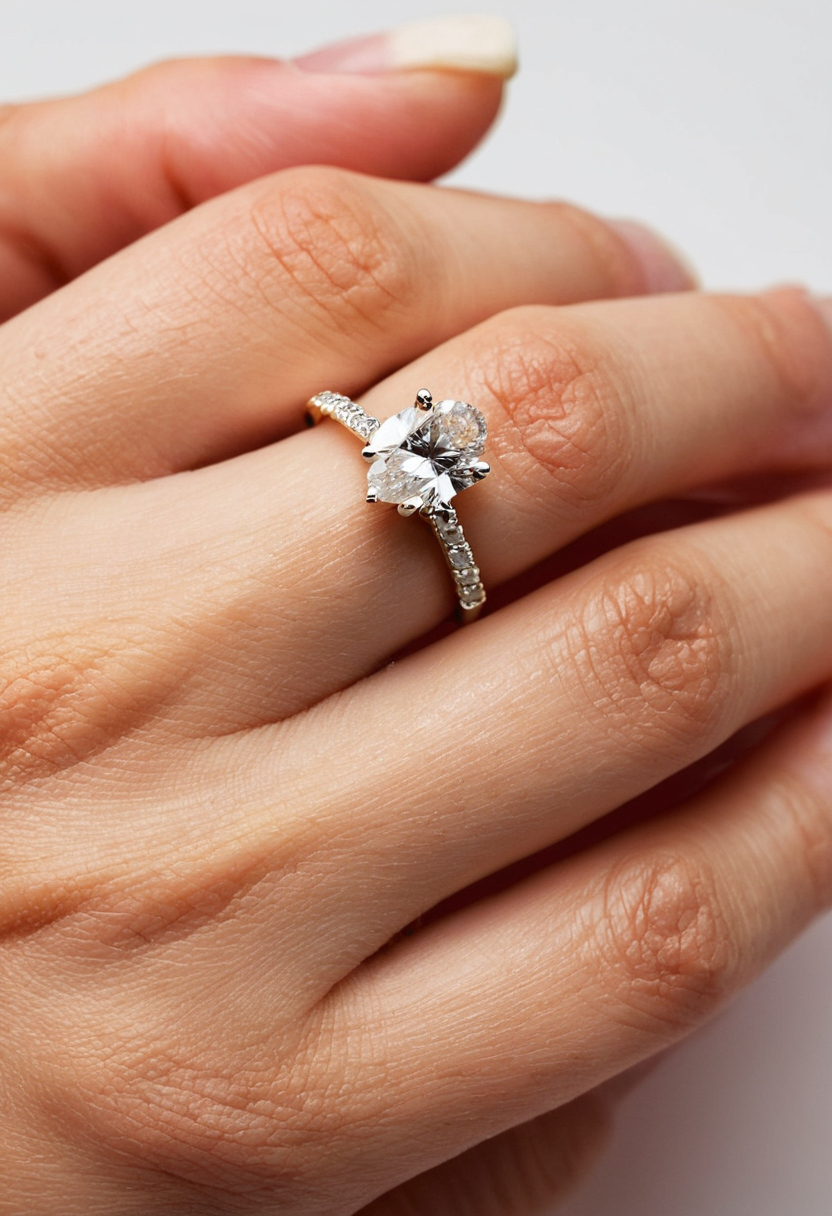
Diamond and moissanite are both durable for engagement rings, but daily wear still depends on setting and care shown with jewellery material and scale cues.
Diamond has the highest Mohs hardness rating at 10, which is why diamond resists scratching extremely well in normal wear. Moissanite also performs strongly for an engagement ring stone, with moissanite identification data listing its Mohs hardness at approximately 9.5. The practical verdict is simple: the centre stone is rarely the weakest part of the ring. The setting, claws, shank, pavé beads, solder joins, and daily habits usually decide how well the ring ages.
Mohs hardness compares scratch resistance, not complete damage-proof wear
Mohs hardness measures resistance to scratching, not resistance to every kind of damage. A hard stone can still chip at a vulnerable edge, loosen after a knock, or collect film from lotion and perfume. A diamond or moissanite engagement ring should come off before weight training, heavy luggage handling, beach sports, or any task that can bend metal claws.
Dubai conditions add small but repeated stresses. Sunscreen, hand cream, perfume, soap, sea water, pool chemicals, and fine sand can dull the ring’s appearance or sit under the stone. Heat itself is not usually the issue during normal outdoor wear, but hot weather encourages more lotion, sweat, and frequent cleaning, which makes residue management part of ring ownership.
Home cleaning should stay gentle. For stone surfaces, the Natural Stone Institute care guidance supports mild liquid dishwashing detergent with warm water for natural stone surfaces, and the same cautious principle suits many jewellery cleaning routines when the ring has no delicate treated stones or fragile settings. Avoid scouring powders and abrasive creams, because abrasive products can scratch polished surfaces and damage metal finishes.
Moissanite and diamond engagement rings should be checked for loose prongs in daily UAE use
Prong security matters more than the diamond-versus-moissanite label once the ring is on the hand every day. Four-claw solitaires, six-claw solitaires, halos, hidden halos, and pavé shoulders all need different inspection habits. A raised centre stone catches more easily on fabric, abayas, gloves, towels, handbags, and gym equipment than a low-set bezel or basket setting.
A practical ownership routine is to check the ring visually each week, listen for a faint rattle near the ear if the stone seems loose, and stop wearing the ring if a claw looks lifted. Professional inspection is sensible at least once or twice a year for daily-worn engagement rings, and sooner after a hard knock. Ultrasonic cleaning should be used only after a jeweller confirms that the stone is secure and that any accent stones, treatments, or setting details can tolerate it.
Resizing and repair also deserve caution. Workshop heat, polishing, rhodium plating, and claw tightening can affect the ring differently depending on the metal, stone setting, and accent stones. Before any adjustment, the buyer should confirm how the jeweller will protect the centre stone and whether the stone description on the repair receipt matches the original ring. Durability keeps the ring wearable, but the next protection is paperwork that clearly says whether the centre stone is moissanite, diamond, natural diamond, or lab-grown diamond.
Dubai buyers should require invoices and documents that state moissanite, diamond, natural diamond, or lab-grown diamond clearly
For Dubai jewellery purchases, the paperwork should identify the centre stone accurately before payment is completed. A moissanite engagement ring should not be invoiced as a diamond ring, and a lab-grown diamond should not be described only as a diamond where origin disclosure or ethical selling standards require clarity.
Paperwork protects both sides of the sale. The buyer can prove what was purchased, and the jeweller can show that the stone identity, metal purity, size, and any report details were disclosed before the ring left the showroom or workshop.
Correct invoice wording should name the centre stone material, not just the ring style
An engagement-ring invoice should describe the ring as an item of jewellery and then describe the centre stone as a material. “Solitaire engagement ring” is a style description, not a stone description. “Diamond look,” “diamond alternative,” or “moissanite diamond” can create confusion because those phrases blur identity.
Ask for wording that separates the centre stone, accent stones, and metal. A clear invoice can include:
- Moissanite ring: “18K gold engagement ring with one moissanite centre stone, round brilliant cut, approximate millimetre size stated, with any accent stones separately described.”
- Natural diamond ring: “18K gold engagement ring with one natural diamond centre stone, carat weight, colour, clarity, cut details where available, and grading report reference if supplied.”
- Lab-grown diamond ring: “18K gold engagement ring with one laboratory-grown diamond centre stone, carat weight, colour, clarity, cut details where available, and grading report reference if supplied.”
Metal purity also belongs on the invoice. A ring described as 18K gold, 22K gold, platinum, or another alloy should match the actual metal supplied, because the final ring value and future resizing approach depend on both the stone and the metal.
Diamond certificates and moissanite reports do not mean the same thing
A diamond grading report usually documents diamond-specific qualities such as carat weight, colour grade, clarity grade, cut information, measurements, and identifying details. A natural diamond report and a laboratory-grown diamond report should not be treated as interchangeable if the buyer cares about origin.
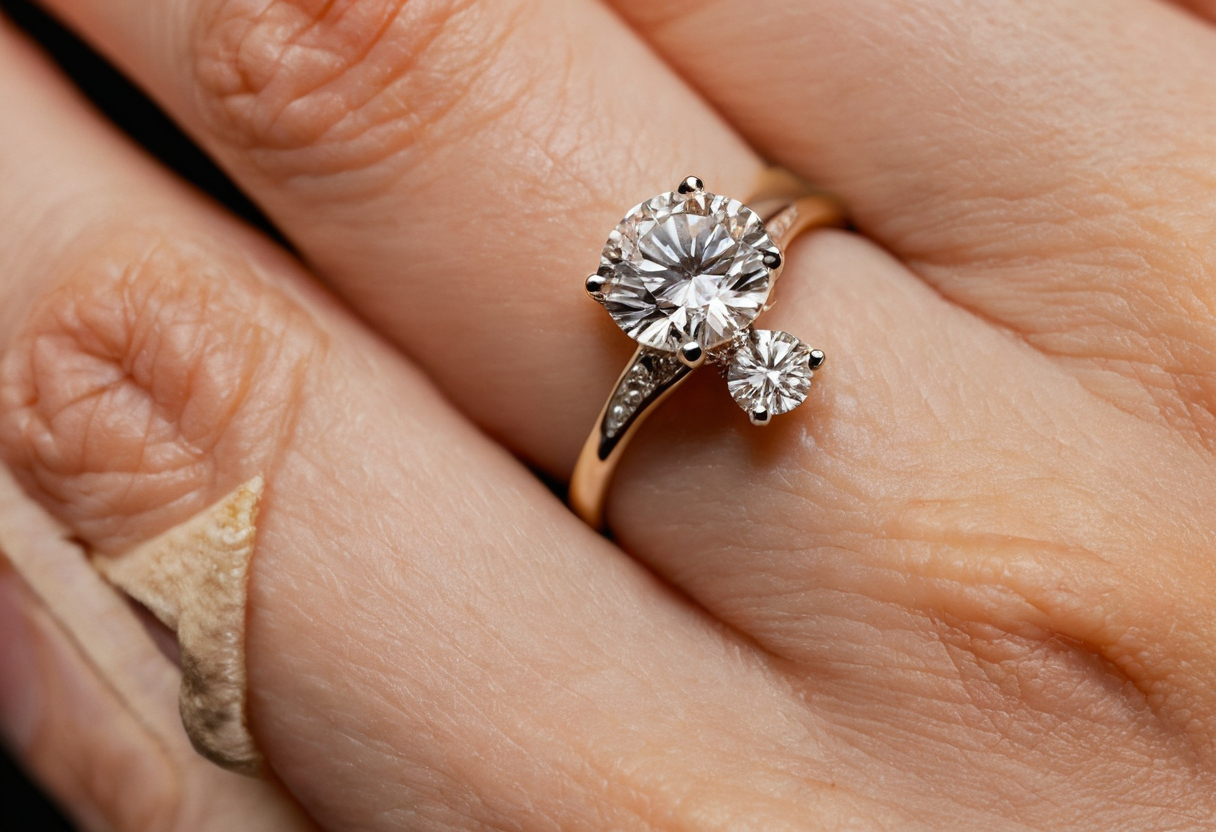
Dubai buyers should require invoices and documents that state moissanite, diamond, natural diamond, or lab-grown diamond clearly shown with jewellery material and scale cues.
A moissanite document is different. A moissanite authenticity card or report may confirm that the stone is moissanite, describe colour category, give measurements, or state a carat-equivalent size for visual comparison. That document should not be presented as a diamond grading report, because moissanite is not graded by the diamond 4Cs in the same commercial sense.
The practical test is simple: the document name, invoice description, and salesperson explanation should all use the same stone identity. If one paper says moissanite, another says diamond, and the receipt says only “engagement ring,” ask for correction before paying the balance.
A Dubai buyer should ask these disclosure questions before paying a deposit
A deposit is the point where ambiguity becomes expensive, especially for custom orders and resizing requests. Before payment, ask direct questions and require direct wording on the receipt or order form.
- Is the centre stone moissanite, natural diamond, or laboratory-grown diamond?
- If the stone is diamond, what grading report or certificate is supplied, and does the report state natural or laboratory-grown origin?
- If the stone is moissanite, will the invoice say “moissanite” rather than “diamond-like” or “diamond alternative”?
- Are accent stones diamond, lab-grown diamond, moissanite, cubic zirconia, or another material?
- What is the metal purity, and will the invoice state the karat or metal type?
- What resizing, cleaning, repair, return, exchange, and warranty conditions apply after collection?
Clear paperwork does not decide whether moissanite or diamond is more meaningful for the proposal. Clear paperwork only removes the risk of buying one material while believing it is another, which lets the next decision focus on budget priority, design goal, and the meaning the ring should carry.
Moissanite or diamond is the better choice only after the buyer chooses a budget priority, design goal, and meaning
For couples buying an engagement ring in Dubai, the better choice depends on whether the priority is diamond identity, visible size, budget control, traditional symbolism, or a custom design brief. Moissanite can suit buyers who want a larger bright centre stone, while diamond suits buyers who specifically value diamond material and grading.
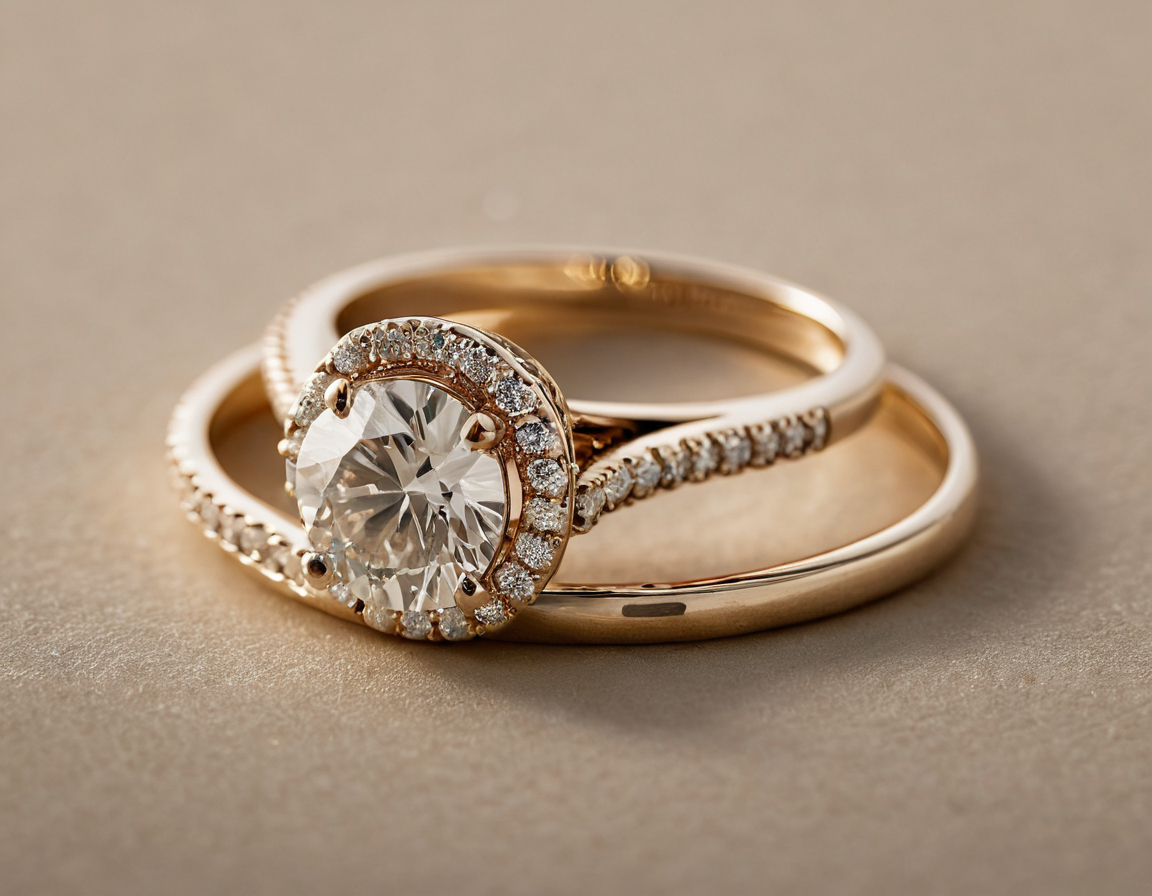
Moissanite or diamond is the better choice only after the buyer chooses a budget priority, design goal, and meaning shown as a fine jewellery reference.
Paperwork protects the buyer from misdescription, but meaning decides satisfaction. A ring can be correctly invoiced and still feel wrong if the recipient expected a diamond, dislikes strong rainbow fire, or wanted a modest natural diamond with a formal grading report. The stone choice should match the proposal story, not only the showroom sparkle.
Choose moissanite when visible size and distinctive fire matter more than diamond identity
Moissanite is a suitable choice when the buyer knowingly wants moissanite, not a stone that will be presented as a diamond. This route often works for designs where the visual brief is a bright solitaire, an elongated oval, a cushion, a radiant-style centre, or a halo ring with a larger centre-stone look.
Moissanite should be described by its actual material, shape, measurements, colour category where supplied, and any carat-equivalent wording with care. Millimetre size is often more useful than diamond carat language because moissanite and diamond do not have the same density, so the same visual spread does not mean the same weight.
Moissanite has one honest limitation for engagement gifting: some recipients may see diamond identity as part of the emotional promise. If the ring is a surprise, the buyer should be confident that the recipient welcomes a diamond alternative. Accurate disclosure also matters for insurance, future repairs, resizing, and family conversations about the ring.
Choose diamond when diamond identity, 4Cs documentation, and traditional preference matter more
Diamond is the stronger choice when the buyer wants the stone to be diamond by material, with the decision organised around cut, colour, clarity, and carat weight. Natural diamond and lab-grown diamond can both be chosen for diamond identity, but the origin should be stated clearly on the invoice and supporting document.
A diamond grading report matters most when the centre stone is the main value driver, the buyer wants to compare stones across different retailers, or the recipient expects formal documentation. The report does not make the ring beautiful by itself, but it helps anchor the discussion in measurable characteristics rather than vague descriptions such as “premium sparkle” or “high quality.”
Diamond can also be the better emotional fit for a classic solitaire, a family-influenced proposal, or a buyer who wants traditional resale recognition without treating the engagement ring as an investment product. The practical price discussion should compare stone origin, 4Cs, setting complexity, metal purity, metal weight, labour, aftercare, and how Dubai gold rates affect a ring’s final price, not a single headline price.
Custom engagement rings in Dubai should confirm stone choice before CAD, casting, and setting work begins
Custom work should lock the centre stone decision before the design moves into CAD, casting, and setting. A moissanite and a diamond with a similar face-up look may require different exact seat measurements, prong positioning, depth allowance, and accent-stone balance. Changing the centre stone mid-design can delay approval and may require a revised setting.
A clear custom brief should confirm the centre stone material, exact dimensions, shape, setting style, metal purity, ring size, accent-stone plan, engraving, and document wording. Buyers planning bespoke engagement ring design in Dubai should also decide early whether the design is built around a diamond certificate or a moissanite report.
The final ring cost should be quoted from the complete specification. Centre-stone choice matters, but platinum or gold purity, shank thickness, pavé work, halo construction, resizing allowance, and workshop labour can all change the result. Before discussing price again, the next step is a disciplined checklist that compares identity, appearance, paperwork, setting, and aftercare in one pass.
A Dubai moissanite-versus-diamond checklist should compare identity, appearance, paperwork, setting, and aftercare before price
For a concise buying decision in Dubai, compare in a fixed order: confirm the stone identity, view the stone in several lighting conditions, check durability and setting suitability, review invoice wording, then compare the final ring price. This order reduces confusion and keeps the purchase aligned with the proposal plan.
The honest verdict is simple: moissanite can be a sensible engagement-ring choice when the buyer wants size, brightness, and clear disclosure. Diamond remains the better choice when diamond identity, 4Cs documentation, and traditional expectation carry more emotional weight. The mistake is treating both stones as the same product with different prices.
Use this side-by-side check before choosing a moissanite or diamond engagement ring in Dubai
Use this side-by-side check at the counter before paying a deposit or approving a custom setting:
- Identity: ask whether the centre stone is moissanite, natural diamond, or lab-grown diamond. Moissanite should not be described as a lab-grown diamond.
- Appearance: view the ring under showroom lighting, near daylight, and on a short phone video. Strong rainbow fire may look beautiful to one wearer and too lively to another.
- Size language: diamond is usually discussed by carat weight and the 4Cs. Moissanite is often discussed by millimetre size, cut style, colour category, and sometimes carat-equivalent wording, which should be treated as an approximate visual-size guide rather than diamond weight.
- Setting: check prong thickness, stone height, wedding-band fit, and whether the design protects the girdle during daily wear. A tall solitaire can catch more easily than a lower basket or protective halo.
- Paperwork: require the invoice to name the centre stone material. The description should say “moissanite engagement ring,” “natural diamond engagement ring,” or “lab-grown diamond engagement ring,” not only “diamond-style ring.”
- Aftercare: ask how cleaning, resizing, prong tightening, and future servicing will be handled. The best-looking ring on day one still needs practical maintenance after months of wear.
Avoid these buying risks when a stone is described as diamond-like, diamond alternative, or diamond simulant
Ambiguous language creates the main risk. “Diamond-like,” “diamond alternative,” and “simulant” can be acceptable explanatory phrases during a sales conversation, but the final invoice should use the exact stone identity. A phrase such as “moissanite diamond” is confusing because moissanite and diamond are different materials.
Gift expectations matter as much as gemmology. If the recipient has asked for a diamond, a moissanite ring may feel like a mismatch even if the design is beautiful. If the recipient prefers a larger centre stone and likes rainbow fire, moissanite may fit the proposal better than a smaller diamond at the same overall ring budget.
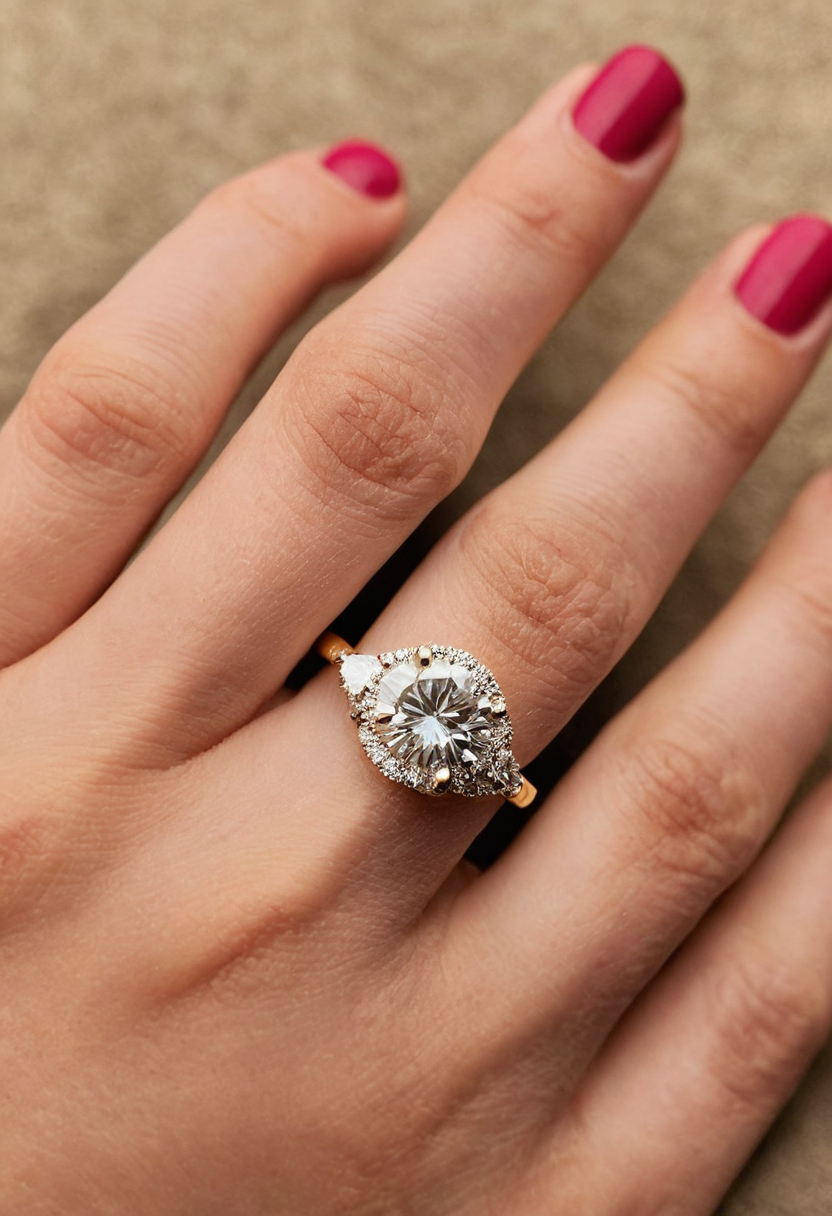
A Dubai moissanite-versus-diamond checklist should compare identity, appearance, paperwork, setting, and aftercare before price shown with jewellery material and scale cues.
Future servicing also depends on correct disclosure. A jeweller resizing, polishing, or repairing the ring should know the centre stone, accent stones, and metal purity before workshop work begins. Clear paperwork protects the buyer, the recipient, and the ring.
Before choosing by price, choose the identity you are comfortable saying out loud: moissanite for a disclosed diamond alternative, natural diamond for mined diamond identity, or lab-grown diamond for diamond material with laboratory origin.
FAQ
Is moissanite a real diamond or a fake diamond?
Moissanite is not a real diamond. Moissanite is a real gemstone material, but it is silicon carbide rather than carbon diamond. The fairest description is “moissanite” or “diamond simulant,” not “fake diamond” on its own and not “moissanite diamond.”
Is moissanite a good choice for an engagement ring in Dubai?
Moissanite can be a good engagement-ring choice in Dubai when the buyer and recipient knowingly want a non-diamond centre stone with strong brightness and rainbow fire. The ring should still have a secure setting, clear invoice wording, sensible aftercare, and a design that suits daily wear.
Can people tell the difference between moissanite and diamond in sunlight?
Some people can notice the difference, especially in larger centre stones. Moissanite often shows stronger rainbow flashes, while diamond usually has a different balance of white brilliance, contrast, and fire. The best test is to compare the stones under showroom lighting, daylight, and a short phone video before buying.
Is moissanite worth more than diamond?
Moissanite and diamond should not be compared as if they are the same material with different price tags. Diamond value discussions usually depend on origin, cut, colour, clarity, carat weight, documentation, and market demand. Moissanite is normally chosen for appearance, size, and budget control, not for diamond identity or diamond-style grading value.
What wording should be on the invoice for a moissanite engagement ring?
A moissanite engagement-ring invoice should clearly say “moissanite centre stone” or “moissanite engagement ring.” Good wording should also describe the metal purity, stone shape, approximate millimetre size, accent-stone materials, and any supplied report or authenticity card. Avoid invoice wording that says only “diamond-style ring,” “diamond alternative,” or “moissanite diamond.”