
Two Dubai jewellery counters display credible gold rates, yet the quotations for similar pieces differ sharply. Before choosing the apparent bargain, the buyer must answer four questions: who published the rate, when was it effective, which purity and weight were priced, and what charges were added afterward? A gold rate board is a time-stamped comparison input, not a complete invoice or government-fixed tariff.
Who publishes Dubai gold rate boards, and is the rate government-set?
In Dubai’s retail jewellery market, the reference associated with the Dubai Gold & Jewellery Group is an industry reference, not automatically a government-fixed selling price. Buyers should verify the publisher, market scope and effective time rather than assuming every electronic board, website or shop sign carries identical authority.
The Dubai Gold & Jewellery Group reference rate is an industry benchmark, not the whole retail quote
Two boards can show professional-looking AED-per-gram figures while the finished pieces still have very different prices. The distinction is simple: a rate board supplies a comparison input for gold of a stated purity, while a retailer supplies the commercial quotation for the actual jewellery.
The entity’s official styling is Dubai Gold & Jewellery Group. Buyers may also encounter shortened references such as “Dubai Jewellery Group” or broader phrases such as “Dubai gold and jewellery,” but those phrases do not prove that a displayed figure came from the Group. Check the official website for the Group’s current identity and published display rather than relying on a third-party page using a similar name.
The Dubai Gold & Jewellery Group reference belongs in the context of Dubai retail comparison. Buyers should not assume that it governs wholesale trades, transactions in another emirate, overseas sales, old-gold buyback offers or bullion products. Each transaction may use a different pricing basis.
Government oversight is a separate issue. Applicable authorities may regulate matters such as business licensing, consumer representations, precious-metal conformity and weighing accuracy. Those controls do not turn an industry reference into an all-inclusive government tariff or require every retailer to apply the same making charge.
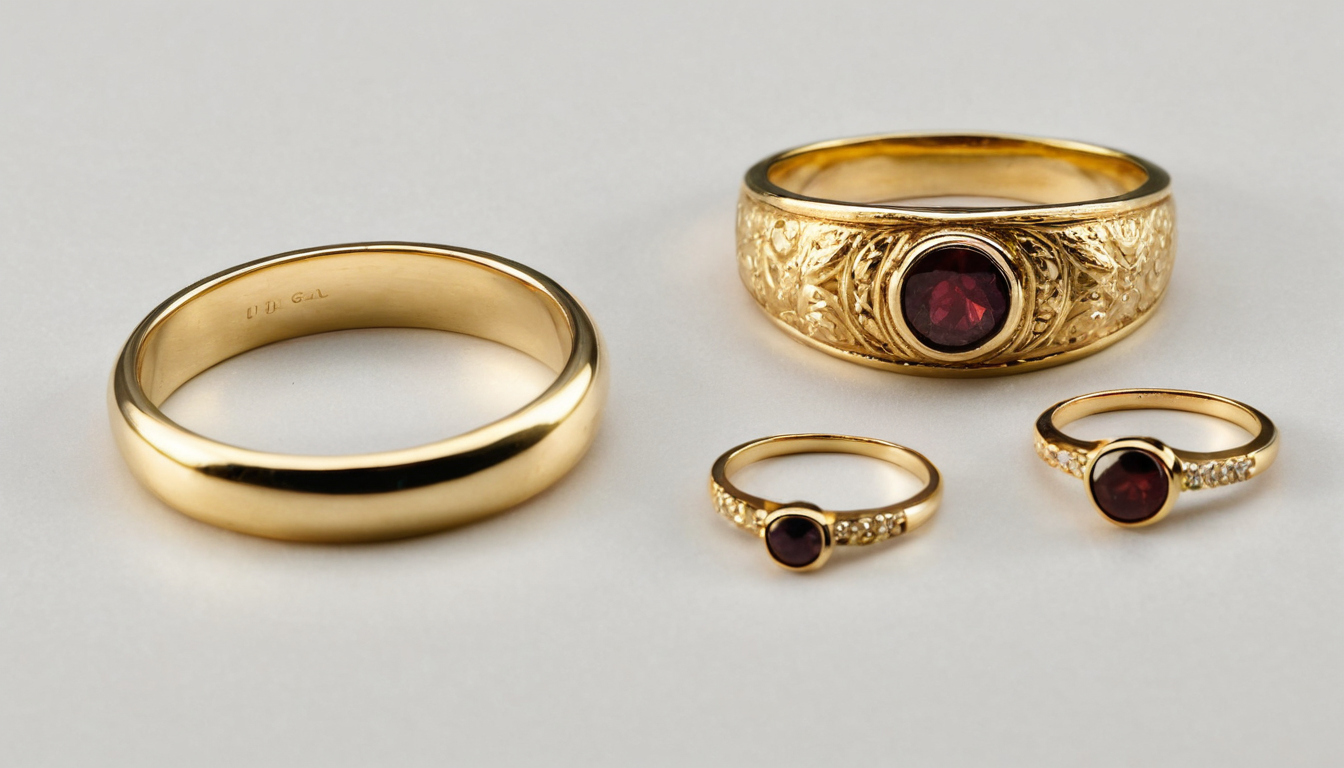
Who publishes Dubai gold rate boards, and is the rate government-set shown with jewellery material and scale cues.
- Confirm the publisher: Look for the full Dubai Gold & Jewellery Group name and verify the display against the Group’s official channel.
- Confirm the transaction: Establish whether the figure relates to a Dubai retail jewellery purchase rather than wholesale gold, a coin, scrap-gold buyback or another market.
- Separate rate from quote: Ask whether the retailer is applying the displayed reference directly or using another disclosed selling rate.
- Request the complete price: Obtain the gold value, chargeable gold weight, making charge, stone value, other disclosed charges and applicable tax as separate lines where relevant.
A shop display should identify its rate source and effective time
A useful shop display answers more than “What is gold today?” It identifies the source, currency, weight unit, purity category and effective date or time. A board that says only “gold rate” leaves the buyer unable to tell whether the figure represents 24K, 22K, 21K or 18K gold, or whether it is quoted per gram or under another unit.
A retailer’s website, messaging quotation or counter card also needs context. Capture the displayed time, then ask the salesperson to record the rate actually applied to the order. A screenshot without a timestamp can create a false saving if the second quotation was prepared after the reference changed.
- Photograph or record the board’s publisher and timestamp.
- Match the listed karat and per-gram unit to the jewellery quotation.
- Ask when the retailer fixes the rate: at quotation, deposit, full payment, collection or another agreed stage.
- Keep the written quotation and final invoice so the applied rate and additional charges can be checked independently.
Publisher identity establishes where the comparison begins, but timing determines whether two figures can fairly be compared.
When does the Dubai Gold & Jewellery Group update its rate, and what does the board show?
A Dubai gold rate is comparable only when its date, displayed time, currency, weight unit, purity and rate category match the retailer’s quotation. Publication practices can change, so buyers should use the timestamp on the Dubai Gold & Jewellery Group live display rather than assuming a fixed daily schedule or saving an undated screenshot.
The timestamp determines whether two Dubai gold quotes are comparable
Check the official display when requesting each quote and record the date and time shown. If the display states a time zone, retain that detail as well. Two retailers quoting during different rate windows may legitimately apply different metal rates even if both started from the same industry reference.
A useful written quotation should identify the applied gold rate, purity and quotation time or validity condition. Ask the retailer what event fixes the rate: preparation of the quotation, payment of a deposit, full payment, invoicing or collection. This point matters for reserved and made-to-order jewellery because acceptance can occur after the reference display changes.
Do not describe an earlier board figure as the current Dubai rate. Treat screenshots and archived examples only as evidence of the board’s format at a stated moment. Read the official category label rather than assuming that a displayed figure is an international spot price, wholesale rate, buyback rate or complete retail price.
The karat and per-gram unit must match the jewellery being priced
Confirm that the official display states AED, a per-gram basis and the relevant purity before using it in a calculation. Then match that purity to the retailer’s description and the item’s purity mark. A rate for one karat must not be applied directly to jewellery of another karat, while a per-ounce market quotation cannot be compared with a per-gram retail reference without conversion.

When does the Dubai Gold & Jewellery Group update its rate, and what does the board show shown with jewellery material and scale cues.
The board supplies a time-stamped metal-rate input, not the total item price. Once the fields match, the next test is comparing different purities without mistaking a theoretical conversion for the published figure.
How should a buyer convert and compare Dubai gold rates across 24K, 22K, 21K and 18K?
Buyers should use the published rate for the item’s stated karat whenever that purity appears on the same time-stamped board. A theoretical conversion can check plausibility, but it should not replace the published reference because methodology and rounding may affect the displayed figures.
A karat conversion table is a cross-check, not a substitute for the published rate
The World Gold Council explanation of gold jewellery purity defines karat as parts of gold out of 24. Dividing the karat number by 24 therefore gives the alloy’s theoretical gold proportion.
| Karat | Theoretical calculation | Theoretical gold proportion | How to use it |
|---|---|---|---|
| 24K | 24/24 | 100% | Fine-gold baseline for a reasonableness check |
| 22K | 22/24 | 91.6667% | Multiply the hypothetical 24K rate by 0.916667 |
| 21K | 21/24 | 87.5% | Multiply the hypothetical 24K rate by 0.875 |
| 18K | 18/24 | 75% | Multiply the hypothetical 24K rate by 0.75 |
For example, if a purely hypothetical 24K reference were AED 300 per gram, proportional checks would produce AED 275 for 22K, AED 262.50 for 21K and AED 225 for 18K. The time-matched published karat figures remain the correct comparison points if the board lists them.
The 18K calculation equals 75% gold and corresponds conventionally to a 750 fineness mark, meaning 750 parts per thousand. These fractions describe nominal purity, not applicable UAE assay tolerances, conformity findings or a guarantee that simple multiplication will reproduce every published retail rate.
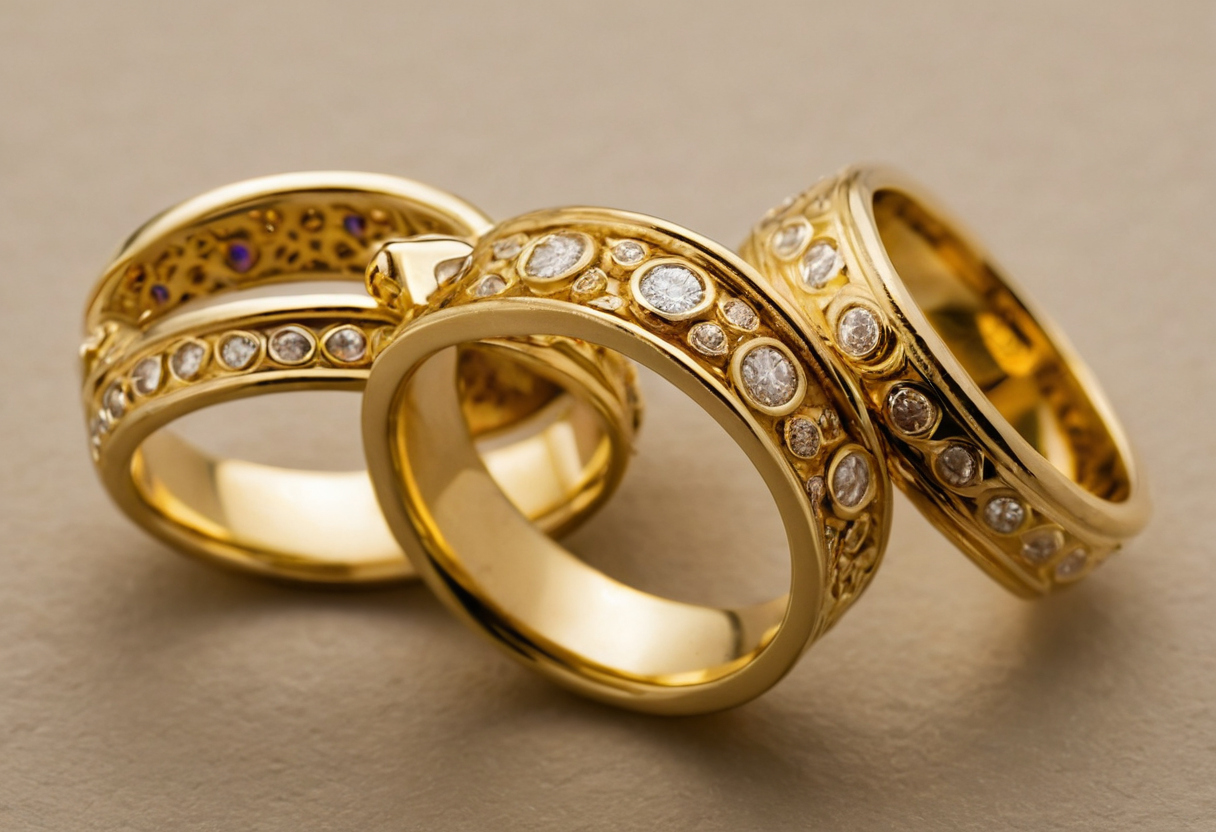
How should a buyer convert and compare Dubai gold rates across 24K, 22K, 21K and 18K shown with jewellery material and scale cues.
A per-gram comparison must use the chargeable gold weight rather than the item’s unexplained total weight
Gross jewellery weight may include gemstones, enamel, springs, attachments or other non-gold components. Buyers should request a written breakdown showing the item’s gross weight, stone or non-gold weight where relevant, and the gold weight to which the per-gram rate is applied.
Consider an 18K bracelet weighing 12.4 grams in total, including 2.1 grams of stones and non-gold components. The chargeable gold weight would be 10.3 grams if the retailer confirms that deduction. At the hypothetical AED 225 rate, the metal calculation is AED 2,317.50, not AED 2,790 based on unexplained gross weight.
Once purity and chargeable weight align, the buyer can test whether the retailer applied the reference consistently across the complete quotation.
How should buyers use the reference board to check a jewellery retailer’s quote?
For a Dubai jewellery purchase, record the board’s source and timestamp, match the item’s karat, confirm the chargeable gold weight, and separate metal value from every additional charge. This creates a like-for-like comparison without assuming that the lowest displayed rate produces the lowest final invoice.
A like-for-like quote records the same time, purity, weight and product specification
Use the reference board as a checkpoint, then test each retailer’s written quotation through the same six-step workflow:

How should buyers use the reference board to check a jewellery retailer’s quote shown as a fine jewellery reference.
- Identify the source: Record the publisher or reference named by the retailer rather than relying on an unlabelled screen or handwritten figure.
- Match the timestamp: Compare quotes prepared at the same date and approximate time. A later quote may reflect a changed reference rate.
- Match the karat: Compare 18K with 18K or 22K with 22K. Do not compare different purities by looking only at the AED-per-gram figure.
- Confirm the weight: Request the net or chargeable gold weight, especially where stones, enamel, non-gold fittings or other materials contribute to gross weight.
- Record the applied rate: The quotation should show the actual gold rate used, not merely point to a rate board.
- Separate additional charges: Identify the making-charge basis, stone price, other product charges, applicable tax and final payable total.
A useful written quotation might read: 18K gold; net gold weight 8.40 g; applied gold rate AED X per gram; metal value AED Y; making charge AED Z; stone charge AED A; applicable tax AED B; total AED C; quotation time and validity stated. Letter placeholders prevent a temporary market figure from appearing current after publication.
Two retailers become comparable only when both quote the same purity, 8.40 g chargeable gold weight, timestamp, stone specification and design complexity. Retailer A may apply a lower making charge but a higher stone price; Retailer B may show a lower metal line but a higher final total. For custom work, compare estimated weights first and require the final invoice to reflect the completed piece’s agreed chargeable weight and pricing terms.
The retailer should explain when the quoted gold rate becomes fixed
Rate-lock practices can differ by retailer and transaction. A ready-made piece may be priced when the quotation, deposit, order confirmation or final payment is processed. A custom or made-to-order piece may use an agreed rate at order confirmation, or a later rate once the final gold weight is known.
Ask one precise question before paying: “At which transaction stage does this gold rate become fixed, how long is the quotation valid, and what happens if the reference rate or finished weight changes before collection?” The written answer should also explain whether a deposit is refundable and how any balance will be recalculated.
Even after the applied gold rate is verified, the buyer must still examine the charges that the reference board does not contain.
The Dubai gold rate board does not include every charge on a finished jewellery invoice
The reference rate addresses the gold component rather than the complete price of a finished ring, chain or stone-set piece. A Dubai retail quote should separately identify the applied gold rate and weight, making or fabrication charges, stone values, other disclosed fees and applicable tax under current UAE rules.
Making charges require their own basis, amount and negotiation terms
A retailer may calculate making charges as an amount per gram, a fixed amount for the piece or a percentage based on a stated value. No single format proves that one quotation is cheaper. Casting, hand assembly, setting, engraving, finishing and design complexity can change the labour component.
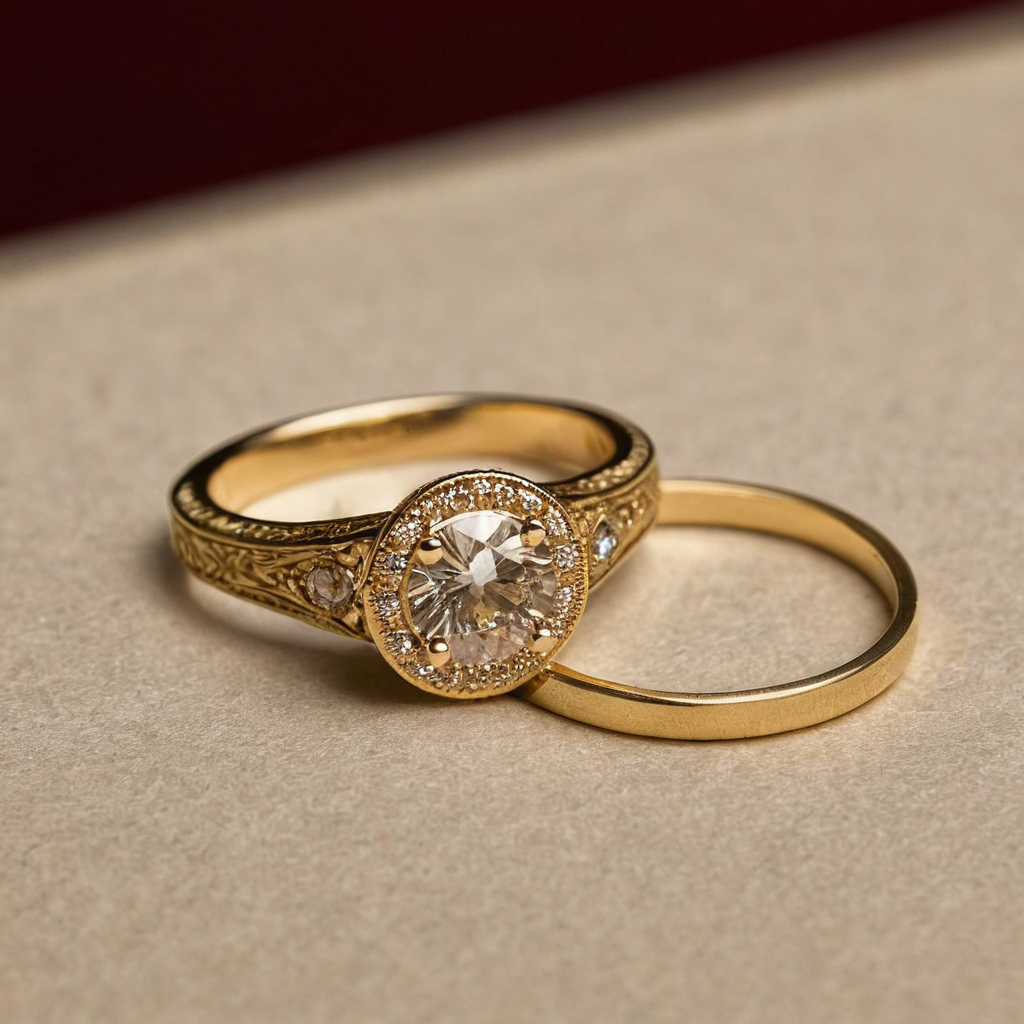
The Dubai gold rate board does not include every charge on a finished jewellery invoice shown as a fine jewellery reference.
The written quotation should state the calculation basis and clarify whether any discount reduces the making charge, another subtotal or the pre-tax total. Bespoke pieces may also include design or development costs, while repairs follow a service quotation rather than the retail gold board. See how the gold rate feeds into a finished ring price for a fuller invoice breakdown.
Stone-set jewellery cannot be checked by multiplying gross weight by the board rate
Gross weight may include diamonds, gemstones, clasps or other non-gold components. Buyers should request the chargeable gold weight separately, plus stone type, quantity, weight, treatment or grading details where relevant, setting labour and tax. Multiplying the whole item weight by the gold rate can overstate its metal value.
Bullion-style products require a different comparison because purity, premium and paperwork replace many jewellery-specific cost lines. Review how reference rates apply differently to gold coins. The remaining question is what group membership and government controls actually verify.
What do Dubai Jewellery Group membership and government controls actually prove?
Dubai Gold & Jewellery Group membership, a displayed reference rate and government compliance controls answer different questions. Membership indicates an industry affiliation, while applicable authorities oversee matters such as trade licensing, precious-metal conformity, weighing accuracy and consumer protection. Buyers should verify each point independently rather than treating one badge as proof of everything.
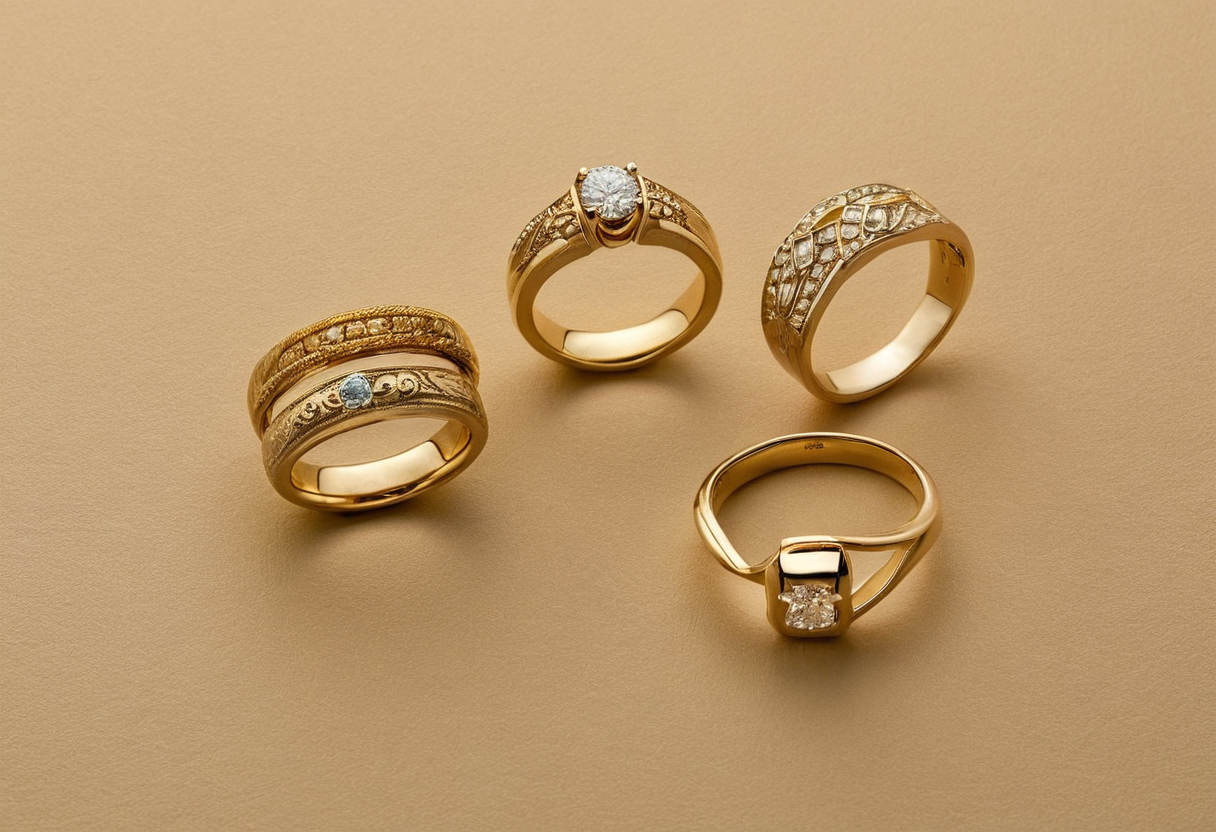
What do Dubai Jewellery Group membership and government controls actually prove shown with jewellery material and scale cues.
Group membership should be verified through a current official record
An in-store logo or dated certificate does not establish current membership. Check the retailer through the Dubai Gold & Jewellery Group website or request written confirmation from the Group. Match the recorded trading name and status with the name on the quotation, receipt and shop licence. If public verification is unavailable, do not assume that displaying the Group’s rate proves membership.
Hallmarking and weighing controls do not set a retailer’s making charge
Precious-metal conformity, fineness marks and retail scale controls concern what the item contains and how accurately it is weighed. These controls do not determine a retailer’s making charge, design premium, stone price, discount or buyback terms. A complaint about suspected short weight, misleading purity or an invoice discrepancy should identify the specific issue and go to the relevant Dubai or UAE authority for that issue.
A practical red-flag checklist helps buyers identify a weak quotation
- No publisher, date or effective time for the applied gold rate.
- The board shows one karat while the quotation prices another.
- Gross weight appears without a separate chargeable gold weight for stone-set jewellery.
- Making charges, stones, tax or other additions are bundled without explanation.
- The seller calls a commercial quotation a mandatory “government rate.”
- The invoice omits purity, weight, rate basis or item description.
Ask for corrections before paying, retain photographs of the board and item, and keep the quotation, payment record and invoice. A sound buying decision comes from checking affiliation, material, weight and price independently, using the board as the time-stamped starting point rather than the final answer.
Frequently asked questions
How can I find the current Dubai Gold & Jewellery Group rate for one gram of gold?
Check the Group’s official live display and read its current timestamp, currency, per-gram unit and purity category. Do not rely on an undated search result or saved screenshot. Record the displayed rate at the same time that the retailer prepares the quotation.
How do I calculate the gold component of a jewellery price per gram in the UAE?
Multiply the retailer’s disclosed applied rate for the correct karat by the confirmed chargeable gold weight. Keep making charges, stones, other materials and applicable tax outside that first calculation. If the item is stone-set, do not use gross weight unless the retailer confirms that gross weight is also the chargeable gold weight.
Is the rate for selling old gold back to a Dubai retailer the same as the displayed retail gold rate?
Not necessarily. An old-gold buyback is a different transaction from a retail jewellery purchase and may involve the item’s tested purity, recoverable gold content and disclosed deductions. Ask for the buyback rate, assessed weight and every deduction in writing rather than assuming that the retail board controls the offer.
Are making charges included in Dubai gold rate boards, and must every shop charge the same amount?
The reference board does not establish one universal making charge. Retailers may use fixed, per-gram or percentage-based making charges, depending on the product and pricing structure. Compare the disclosed making-charge basis and the final payable total, not the gold line alone.
Can a Dubai jewellery retailer quote a different gold rate from the Dubai Gold & Jewellery Group reference?
A retailer may present its own disclosed commercial quotation, so the buyer should not assume that every shop must reproduce an industry reference exactly. Ask the retailer to identify the rate used, its effective time, the relevant karat and when that rate becomes fixed. The written invoice should then allow the applied metal value and additional charges to be checked separately.